
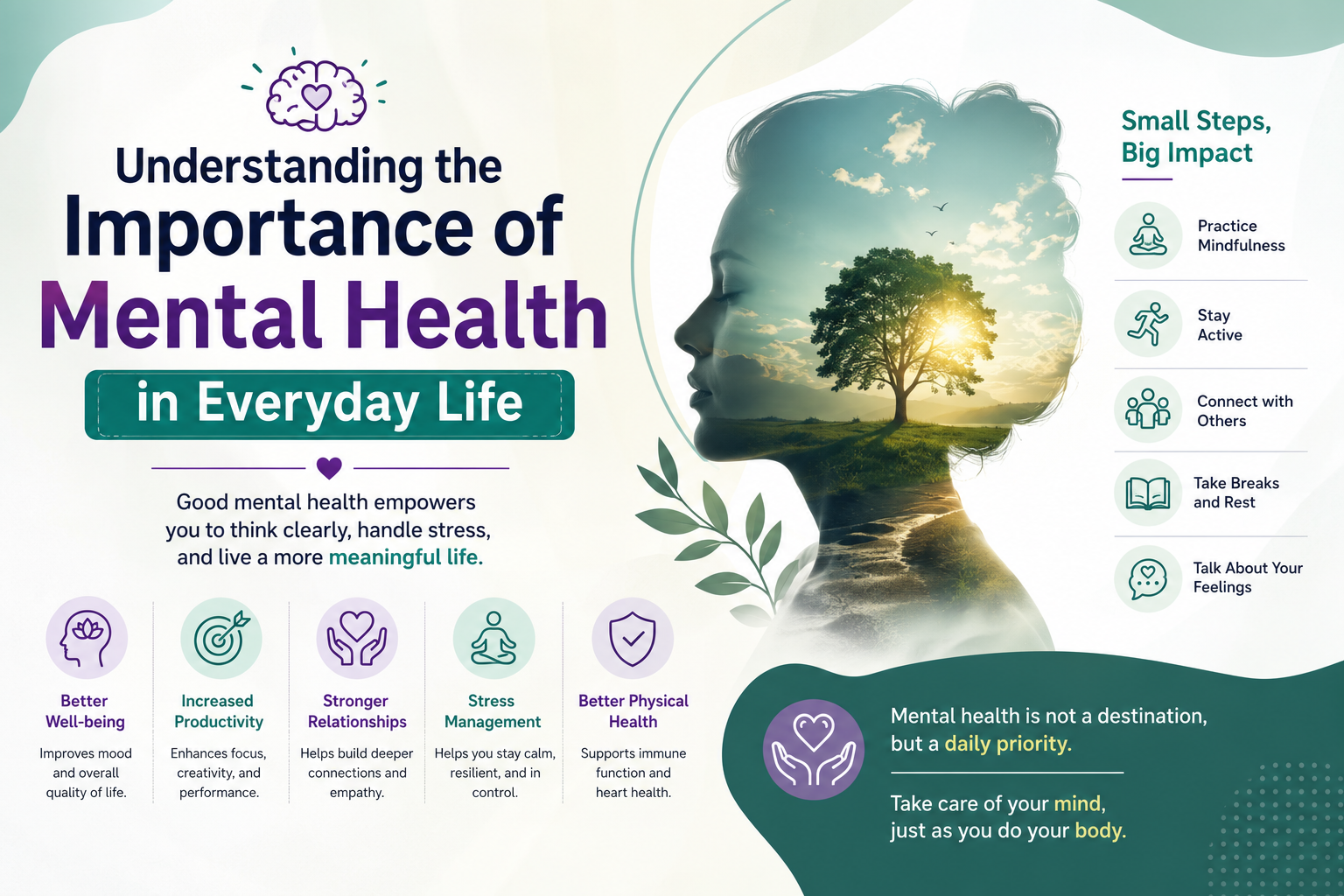
Mental health is an important part of overall well-being and affects every aspect of daily life. It influences how people think, feel, make decisions, and interact with others. Good mental well-being helps individuals manage stress, maintain healthy relationships, and adapt to life’s challenges. Just like physical health, emotional and psychological health require regular care and attention. Understanding the importance of mental health helps people build healthier, happier, and more balanced lives.
What Is Mental Health?
“Mental health” refers to a person’s emotional, psychological, and social well-being throughout every stage of life. It affects the way people cope with stress, solve problems, and communicate with others. Having good mental health does not mean a person never experiences sadness or anxiety. Instead, it means they have the ability to manage emotions in healthy and productive ways. Developing positive habits and seeking support when needed can improve overall mental well-being.
Why Mental Health Matters
Mental health plays a significant role in personal growth, relationships, education, and career success. When emotional well-being is strong, people are more likely to make thoughtful decisions and respond positively to challenges. Good mental health also improves confidence, motivation, and resilience during difficult situations. Ignoring emotional struggles can affect both physical health and everyday functioning over time. Prioritizing mental well-being benefits individuals, families, and society as a whole.
Signs of Good Mental Health
People with positive mental health often display healthy emotional and social behaviors. While everyone is different, there are several common characteristics that indicate emotional well-being. These signs can help individuals recognize the importance of maintaining a healthy mind. Building these habits takes time and consistent effort. Some common signs include:
- Positive self-esteem and confidence.
- Healthy communication with others.
- Ability to manage stress effectively.
- Good decision-making skills.
- Strong emotional resilience during challenges.
Common Factors That Affect Mental Health
Many different factors influence mental health throughout life, and they often work together rather than separately. Personal experiences, relationships, and environmental conditions all contribute to emotional well-being. Lifestyle habits also play an important role in maintaining psychological balance. Understanding these influences can help people make healthier choices. Common factors include:
- Work or academic pressure.
- Financial challenges.
- Family relationships.
- Physical health conditions.
- Major life changes or unexpected events.
Everyday Habits That Support Mental Health
Simple daily routines can make a significant difference in maintaining mental health over time. Healthy habits improve emotional resilience and help reduce the effects of stress. Consistency is often more beneficial than making major lifestyle changes all at once. Small positive actions can create lasting improvements in emotional well-being. Helpful habits include:
- Getting enough quality sleep every night.
- Exercising regularly.
- Eating a balanced and nutritious diet.
- Practicing mindfulness or relaxation techniques.
- Staying connected with supportive friends and family.
Mental Health Across Different Communities
Awareness of emotional well-being continues to grow in many parts of the world. Conversations about mental health in Melbourne often highlight the importance of reducing stigma and encouraging people to seek support when needed. Community education, workplace initiatives, and public awareness campaigns have helped increase understanding of mental well-being. These efforts encourage open conversations and promote healthier lifestyles for people of all ages. Greater awareness strengthens communities by creating more supportive environments.
The Importance of Family Support
Family members often play a key role in supporting emotional well-being through encouragement, understanding, and communication. Open discussions about feelings help reduce isolation and strengthen relationships within the household. In some situations, families may choose to seek guidance from a family mental health center for additional support and professional advice. Early support can help families address emotional challenges before they become more serious. A caring and supportive home environment contributes to better mental health for everyone.
Ways to Improve Mental Health Every Day
Improving mental health does not always require major lifestyle changes because small actions can have lasting benefits. Creating healthy routines and maintaining balance can improve emotional well-being over time. Consistency is more important than perfection when building positive habits. Everyone can take simple steps to care for their mental well-being every day. Consider the following practices:
- Spend time outdoors whenever possible.
- Limit excessive screen time.
- Practice gratitude regularly.
- Set realistic personal goals.
- Reach out for support when needed.
Conclusion
Mental health is an essential part of living a healthy, balanced, and fulfilling life. It affects how people think, feel, build relationships, and respond to everyday challenges. Taking care of emotional well-being through healthy habits and supportive relationships benefits individuals at every stage of life. Open conversations and greater awareness help reduce stigma and encourage people to prioritize their mental wellness. By making mental health a daily priority, individuals and communities can create a healthier future for everyone.